
A Persistent Challenge for UK Sheep Farmers
Sheep scab, caused by the mite Psoroptes ovis, remains one of the most damaging and costly parasitic diseases, estimated to cost the GB sheep industry around £78-202M per year1.
Despite ongoing efforts, sheep scab continues to pose a significant challenge due to its highly contagious nature and the ability of mites to survive off-host for several weeks. Effective, reliable treatment options are critical to controlling outbreaks and preventing re-infestations.
Tips for managing SCAB on your farm
Affected sheep show signs of intense itching, wool loss, skin lesions, and reduced weight gain. This is why sheep scab not only compromises animal welfare but also impacts farm productivity and profitability. To maximise the benefits and ensure effective sheep scab control, farmers should follow these best practices:
Accurate Diagnosis:
Confirm sheep scab through diagnostic testing before treatment. While other parasites like sheep lice can look the same but require a different treatment, it is also possible to miss scab in the early stages or in carriers.

Treat All Sheep: 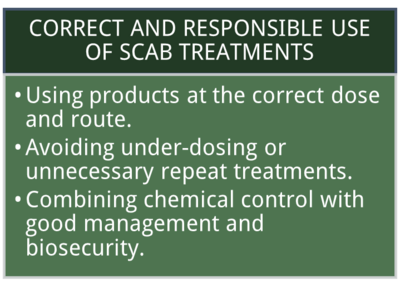
Treat the entire flock simultaneously to prevent untreated carriers from spreading mites. When using persistent products like ZERMEX 2% LA, there is a 6-week window to treat all in-contact animals.
Administer Correctly:
Use the recommended subcutaneous injection technique and dose rate as per the product label.
Maintain Biosecurity:
Isolate new or returning sheep and treat them before introducing into the main flock. Effective quarantine should last 3-4 weeks, with sheep kept separate from the main flock and monitored carefully. It is recommended to perform blood testing on a sample of 12 animals after two weeks in quarantine to detect exposure to scab mites. This test helps determine if treatment is necessary before mixing sheep with the rest of the flock.
Monitor Flock Health:
Regularly check for signs of sheep scab and consult your vet if symptoms persist after treatment. Sheep scab spreads quickly within and between flocks, especially during housing or close contact periods. Early diagnosis and timely treatment are essential to avoid severe clinical signs, production losses, and delayed recovery after treatment.
Record Treatments:
Keep detailed records of treatments to track efficacy and manage resistance risks. Your animal health advisor can tailor treatment protocols to your flock’s specific needs and reduce the risk of resistance development. While resistance to moxidectin in sheep scab mites has been confirmed in the UK, it remains an important tool, so it is vital to use treatments responsibly to preserve their effectiveness.
Treatment Options for Sheep SCAB
The Sustainable Control of Parasites in Sheep (SCOPS) guidelines provide clear recommendations for effective treatment:
- Plunge dipping with an organophosphate (OP) dips
- Long-acting moxidectin injections, such as ZERMEX 2% LA injection, offer long-lasting protection and are recommended especially when dipping is not an option.
How ZERMEX 2% LA Works
Moxidectin, the active ingredient in ZERMEX 2% LA, belongs to a class of parasiticides called macrocyclic lactones. It works by targeting the nervous system of parasites, causing paralysis and death of the mites.
The long-acting formulation ensures that effective drug levels remain in the sheep’s system for an extended period, killing mites present at treatment and preventing re-infestation of the animals for 60 days after treatment. This extended protection helps reduce the need for multiple treatments, saving time and labour for farmers.
Key Benefits of ZERMEX 2% LA:
- ZERMEX 2% LA injection is designed specifically to tackle sheep scab with a single injection.
- Long-acting protection: A single dose provides extended protection, reducing the need to move animals or for repeat treatments.
- Simple administration: Administered as a convenient subcutaneous injection behind the ear, ensuring accurate dosing and compliance.
- Improves animal welfare: By controlling scab promptly, sheep experience less stress and discomfort. Delayed treatment can lead to delayed recovery.
- Supports flock productivity: Healthier sheep translate to better growth rates, wool quality, and overall farm performance.
Why Choose ZERMEX 2% LA for Sheep Scab?
- Proven, effective treatment against sheep scab mites.
- Long-acting protection reduces retreatment frequency.
-
Easy, single-dose administration.
-
Supports animal welfare and flock productivity.
-
Backed by veterinary expertise and UK sheep experience.
Sheep scab remains a significant threat to UK sheep farming, but with effective tools like ZERMEX 2% LA, farmers can confidently protect their flocks and livelihoods. Early diagnosis, prompt treatment, and good management are key to successful control.
Investing in your flock’s health today means better welfare, productivity, and profitability tomorrow. For further information and advice on the appropriate use of ZERMEX 2% LA, please speak to your local Downland RAMA.
Reference:
1 Nixon, EJ, et. al., Vet Record, 2020
ZERMEX® 20mg/ml LA Solution for Injection for Sheep contains moxidectin, POM-VPS. May be prescribed by any Registered Qualified Person (RQP - a veterinarian, a pharmacist or an appropriately qualified RAMA). For further information see the SPC, farmers should contact their animal medicines supplier, RAMA, veterinary surgeon or Downland Marketing Ltd, Warwick Mill Business Centre, Warwick Bridge, Carlisle CA4 8RR.
Use medicines responsibly: www.noah.co.uk/responsible. Prescription decisions are for the person issuing the prescription alone.
Further information can be obtained from the products SPC/Datasheet, from your medicine prescriber or from Zoetis UK Limited, First Floor, Birchwood Building, Springfield Drive, Leatherhead KT22 7LP www.zoetis.co.uk. Customer Support: 0345 300 8034 Use medicines responsibly (www.noah.co.uk/responsible) Prescription decisions are for the person issuing the prescription alone.
Newsletter Content – supplied by Zoetis. Date of preparation: June 2025. MM-41881